
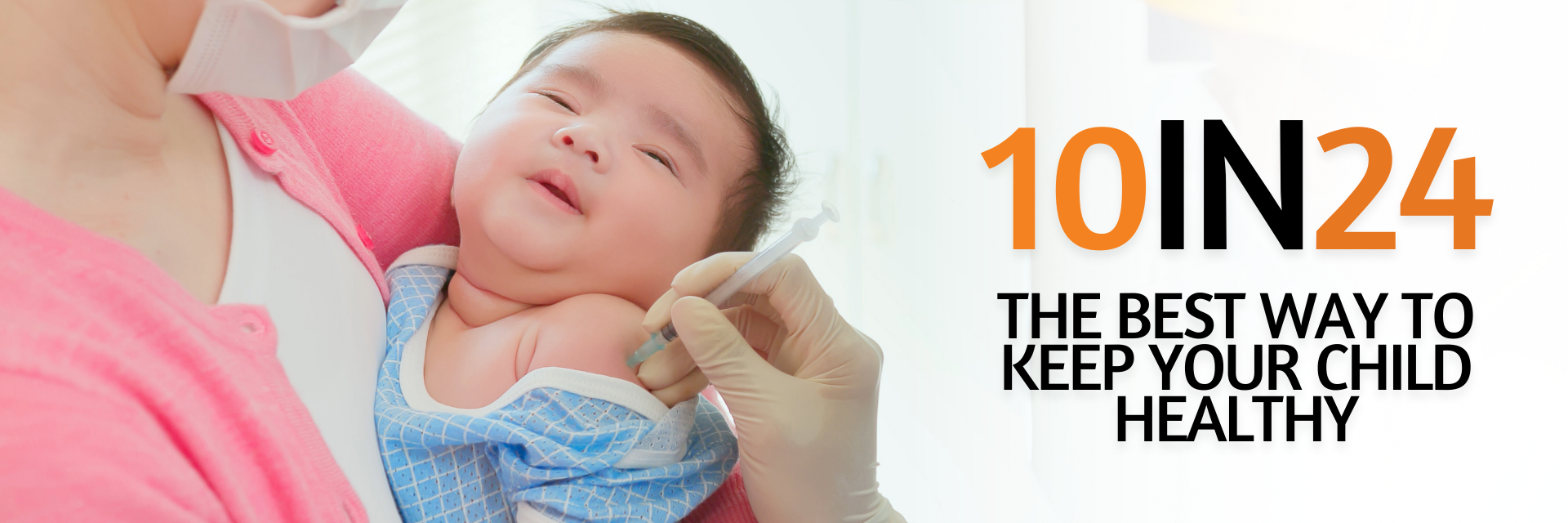
You want to keep your child healthy. In fact, it’s probably something you think about every day. But did you know that there’s an easy way to protect your child from serious diseases all the time? It’s true! Vaccines work day and night to keep children safe from illnesses that could affect them for the rest of their lives. That’s why it’s so vital that kids get 10 important vaccines before 24 months of age.
View the videos below to learn more:
Introduction to 10 in 24
Did you know there are 10 important vaccines every child should get before they turn 2 years old? These vaccines protect against serious diseases that can affect kids for the rest of their lives.
MMR Varicella Flu
MMR: Stops measles, mumps, and rubella. These cause rashes and breathing problems.
Varicella: Prevents chickenpox, which causes itchy rashes and can leave scars
Flu: Protects against the flu, a serious lung illness.
Hep B and A
Hep. B: This vaccine stops hepatitis B, which attacks the liver.
Hep. A: This vaccine protects against hepatitis A, a liver disease that can cause stomach problems.
Non-Emergency Medical Transportation
Did you know? Medicaid can help get you to and from appointments. This service is at no extra cost to you. You can also ask for an attendant to come with you to your appointment.
RV DTap HiB
RV: Stops rotavirus, which causes diarrhea and vomiting.
DTaP: Guards against diphtheria, tetanus, and whooping cough, which can be deadly.
Hib: Prevents Hib meningitis, which can hurt the brain and hearing.
IPV and PCV
IPV: Protects against polio, which can cause paralysis.
PCV: Guards against pneumococcal disease, which affects the ears, lungs, blood, and brain.
What Does 10 in 24 Mean?
It’s a list of the top 10 vaccines that every child should get before they are 24 months of age (or 2 years old). These vaccines protect against very serious illnesses that can affect children for the rest of their lives or even lead to death.
Visit the CDC vaccination webpage to learn more about each vaccine and the recommended age(s) for your child to get each vaccine.
Download a printable 10 in 24 brochure with more information on vaccines.

Frequently Asked Questions (FAQs) About Vaccines
Chances are good that you’ve heard a lot about vaccines over the past few years. But what exactly is a vaccine? And how does it work? A vaccine is medicine that helps the body learn how to defend itself from a certain disease. The vaccine does this by teaching your body to fight the disease without you getting seriously ill. Vaccines are usually given as shots. To get a vaccine is called getting vaccinated.
Yes! Vaccines for children and adults are very safe. All vaccines must be tested before they are used on people. This helps make sure the vaccines work and don’t cause worse health problems than the diseases they are trying to prevent.
Many vaccines have minor side effects. Your child may have a sore arm, feel tired, or get a low fever. This is normal. Most side effects go away within a few days. If you’re worried that your child may be allergic to
a vaccine, talk to your child’s doctor. They can tell you whether or not your child should get a certain vaccine.
Your child’s doctor will have a vaccine schedule for most children. It’s important that your child goes for regular checkups. This way, the doctor can make sure your child is growing well and give them any needed vaccines. Your child may get more than one vaccine at a time.
Your child’s doctor will have a vaccine schedule for most children. It’s important that your child goes for regular checkups. This way, the doctor can make sure your child is growing well and give them any needed vaccines. Your child may get more than one vaccine at a time.
No, vaccines do not overload a person’s body. Vaccines have weakened versions of diseases so your child’s body can learn to fight these illnesses.